
Want to study abroad? But worried about how to manage everything alone with no financial support? Applying for undergraduate scholarships for Pakistani students is the only way to get rid of some of that financial burden and turn your study abroad dream into a realistic plan.
Students feel stuck because tuition fees, living costs, and visa expenses seem impossible to handle on their own. But the good news is that fully funded and partially funded scholarships do exist, and you don’t need extraordinary connections to access them. Our blog shows you where to look, how to apply, and how to improve your chances, so you can move forward with clarity and confidence.
Understanding Undergraduate Scholarships for Pakistani Students
Types of undergraduate scholarships for Pakistani students
Pakistani students applying for undergraduate study abroad usually come across four main scholarship types. Each works differently, and understanding the difference helps you apply more strategically instead of wasting time on options that don’t fit your profile.
- Merit-based scholarships reward strong academics, test scores, or achievements. Universities also expect consistent performance, not just one high result.
- Need-based scholarships focus on financial background and family income. You must clearly show why funding is essential for you to study abroad.
- University-funded scholarships come directly from the institution you apply to. These often combine academic merit with personal potential.
- Privately funded scholarships are offered by foundations or organizations. They usually have specific eligibility criteria and limited seats.
What undergraduate scholarships usually cover
Undergraduate scholarships for Pakistani students usually fall into full funding or partial funding categories, and the difference matters more than many students realize. Fully funded scholarships typically cover tuition fees, basic living expenses, and sometimes travel costs, which reduces pressure during visa and financial documentation. However, partially funded scholarships lower tuition fees or offer fixed grants, but students must plan for remaining expenses in advance. At Edulitera, we see many students succeed by combining partial scholarships with realistic budgeting, education loans, or family support instead of waiting only for fully funded options.
Eligibility Criteria for Undergraduate Scholarships for Pakistani Students
Academic requirements
Most undergraduate scholarships look beyond just final grades. Universities assess subject relevance, academic trends, and consistency across your academic record. Strong performance in subjects related to your chosen degree carries more weight than overall percentages alone. Moreover, a steady academic profile signals discipline and readiness for international study. At Edulitera, we often advise students to explain any academic gaps or grade drops clearly instead of leaving room for assumptions, especially when competing with global applicants.
English language requirements
English proficiency plays a direct role in scholarship decisions, not just admission. Most undergraduate scholarships expect an IELTS score between 6.0 and 7.0, depending on the university and program. Moreover, higher scores strengthen your application and sometimes unlock better funding options. Students with borderline scores still succeed by retaking the test early or choosing universities with flexible language policies. So, planning your test timeline properly avoids last-minute delays that can cost you a scholarship.
Personal and financial requirements
Scholarship committees carefully evaluate your personal statement, activities, and financial background together. Your statement must clearly connect your academic goals with your background and plans. Extracurricular involvement shows initiative and leadership, even if it comes from school projects or community work. However, for need-based scholarships, accurate financial information matters more than exaggeration. Clear documentation and honest explanations help decision makers understand why financial support makes a real difference for your education.
Where to Find Undergraduate Scholarships for Pakistani Students Abroad
University websites offering scholarships
Most universities maintain dedicated pages for international student funding, including scholarships specifically for Pakistani students. These pages usually list eligibility criteria, application deadlines, required documents, and sometimes step-by-step guides to submit applications. Some universities also highlight scholarships based on merit, financial need, or country-specific quotas, making it easier to identify opportunities tailored to applicants. Regularly checking these pages ensures you catch updates, as new scholarships can appear mid-academic year. When applying for scholarships to study abroad, this direct source is often the fastest way to get accurate and current information.
External platforms listing scholarships for students
Several online scholarship databases and education portals collect information from universities, governments, and private organizations, offering a one-stop resource for Pakistani students. These platforms allow filtering by study level, country, or field of interest, making it simpler to find relevant undergraduate scholarships. Also, they often provide application tips, deadline reminders, and links to official sources, so you don’t miss critical steps. However, consulting these external platforms alongside university websites increases your chances of discovering less-publicized opportunities and keeps you updated on scholarships that open throughout the year.
Quick Research
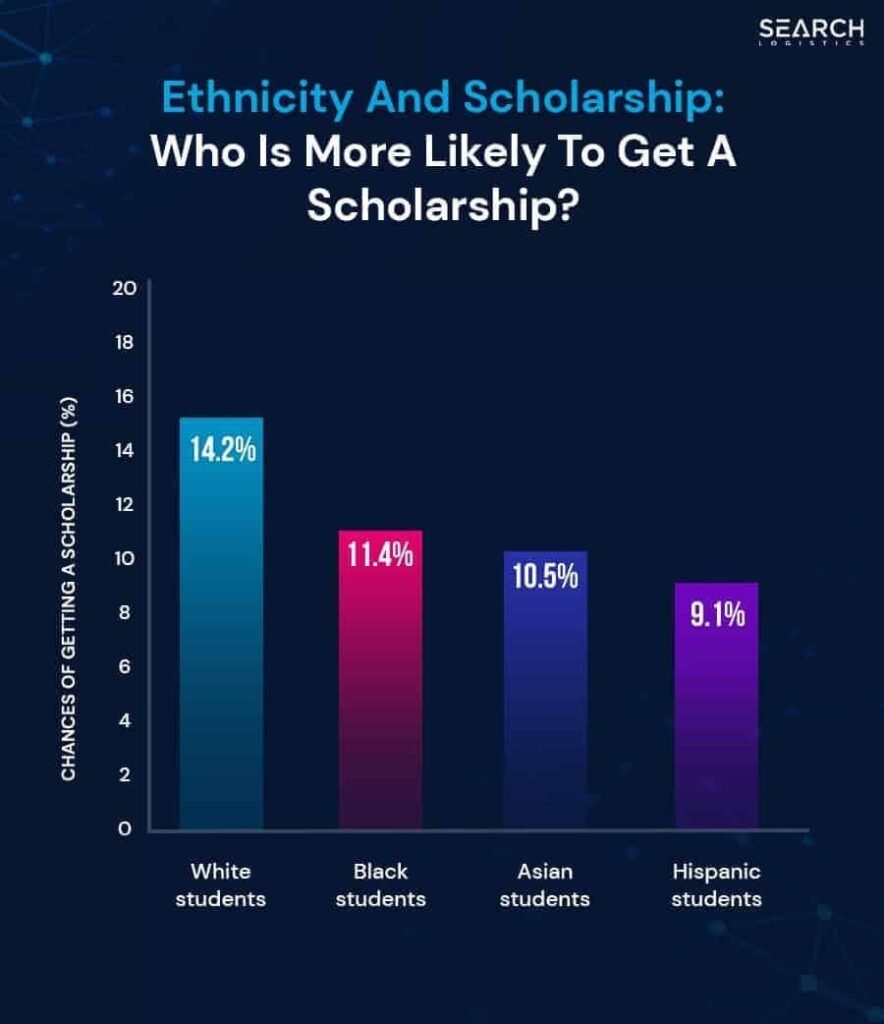
Do you know? A recent study shows that Asian students, including those from Pakistan, have slightly lower chances of receiving scholarships compared to White and Black students, highlighting the importance of strong applications and targeted strategies. Being aware of such trends can help you focus on maximizing your eligibility and presenting compelling applications.
How to Apply for Undergraduate Scholarships for Pakistani Students
Step-by-step process to apply for undergraduate scholarships as a Pakistani student
- Research universities: Identify universities offering scholarships for international students that match your academic interests and career goals.
- Create a shortlist: Filter options based on eligibility criteria, scholarship amount, and deadlines to focus on the most suitable opportunities.
- Organize deadlines: Use a calendar or tracker to keep all application dates and requirements in one place.
- Check application type: Determine if the scholarship needs a separate form or is automatically considered with your admission application.
- Follow instructions carefully: Pay attention to word limits, formatting rules, and required supporting documents to strengthen your submission.
- Submit early and review: Complete applications well before deadlines and double-check all documents for accuracy and completeness to improve your chances.
Documents required for the application
- Most undergraduate scholarship applications require academic transcripts, proof of English proficiency, and standardized test scores if relevant.
- You also need recommendation letters from teachers or mentors who can speak to your achievements and potential, along with a personal statement explaining why you deserve the scholarship and how it fits your goals.
- Some scholarships ask for additional documents, like financial statements, portfolios, or community service records.
- Preparing these documents early, checking for accuracy, and tailoring them to each scholarship makes your application stronger and ensures you meet all the requirements without last-minute stress.
Common Mistakes Students Make When Applying for Undergraduate Scholarships
Late applications
Many students miss out on scholarships because they submit applications close to or after deadlines. Universities often close portals once the deadline passes, leaving no room for late entries. Some students assume they can request extensions, but most institutions strictly enforce deadlines. In addition, planning, preparing documents early, and starting the application process weeks in advance help avoid this common mistake. Applying for undergraduate scholarships for Pakistani students requires discipline in time management, and late submissions can instantly disqualify strong candidates.
Ignoring eligibility criteria
Overlooking or misreading eligibility requirements is another frequent error. Some students apply to scholarships for which they do not meet the minimum GPA, nationality, or program-specific criteria. But this wastes time and effort and can even affect future applications if a university notes repeated ineligible submissions. Carefully reviewing each scholarship’s rules and confirming eligibility before preparing documents saves effort and increases the likelihood of success.
Weak documentation
Submitting incomplete or generic documents weakens an application significantly. Recommendation letters that do not highlight achievements, transcripts with missing information, or personal statements that are vague can all reduce your chances. Additionally, tailoring each document to the scholarship, checking for errors, and ensuring all requested materials are included demonstrates seriousness and attention to detail, which selection committees value highly.
Tips to Improve Chances of Getting Undergraduate Scholarships for Pakistani Students
Early planning
Starting the scholarship search and application process well in advance gives students a significant advantage. Early planning allows time to research eligibility, prepare strong personal statements, and request recommendation letters without rushing. It also helps in scheduling standardized tests or language proficiency exams if needed. By preparing documents and applications ahead of time, students can carefully review and refine them, increasing their chances of success.
Applying to multiple options
Relying on a single scholarship reduces your chances of receiving funding. Applying to several scholarships simultaneously allows you to explore a range of opportunities, from merit-based awards to country-specific or need-based programs. Moreover, each application increases the likelihood of success and exposes you to different selection criteria, helping you tailor your documents more effectively over time.
Choosing realistic opportunities
Focusing on scholarships that align with your academic profile and background is crucial. Applying only to highly competitive or highly selective scholarships can waste time and energy. Assess your GPA, extracurriculars, and financial need, then target scholarships where you meet most or all requirements. Overall, realistic choices improve the probability of success while keeping the process manageable.
Conclusion
Overall, studying abroad is achievable with careful planning, thorough research, and strong applications. By understanding scholarship types, meeting eligibility criteria, preparing accurate documents, and avoiding common mistakes, students can significantly improve their chances of funding their education. Moreover, exploring multiple opportunities, applying early, and choosing realistic scholarships further strengthen your prospects. With persistence and the right approach, you can turn financial challenges into manageable steps and secure the support you need to pursue your goals. Above all, undergraduate scholarships for Pakistani students make this journey possible.
Frequently Asked Questions
Q1: Can I get a 100% scholarship to study abroad?
Yes, 100% scholarships exist, but they are highly competitive and usually cover tuition, living costs, and sometimes travel. They are often merit-based, country-specific, or offered by governments and top universities.
Q2: Which country is easiest to get a scholarship in?
Countries like Germany, Norway, and Finland offer numerous fully funded scholarships with fewer restrictions for international students, making them relatively easier to access.
Q3: What GPA do I need for a scholarship?
Most scholarships require a strong academic record, typically a GPA of 3.0 or above on a 4.0 scale, though highly competitive programs may prefer 3.5 or higher.
Q4: Can I get a scholarship during the visa process?
Scholarships are usually awarded before or during admission, not at the visa stage. For Pakistani students seeking guidance on finding, applying for, and securing scholarships abroad, Edulitera provides expert consultation, so start planning your scholarship journey today with our support.